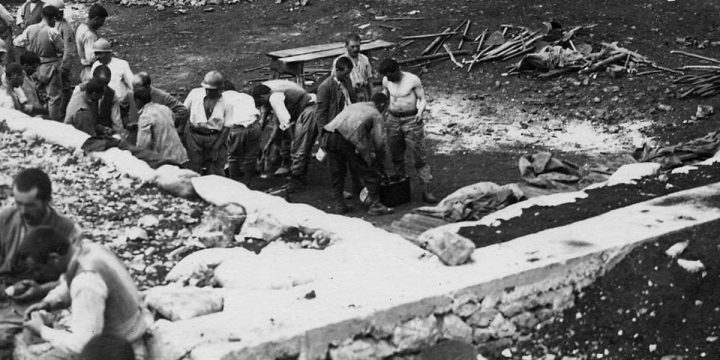
Third Battle of the Isonzo (18 October – 3 November 1915)

Third Battle of the Isonzo (18 October – 3 November 1915)

TheBattles
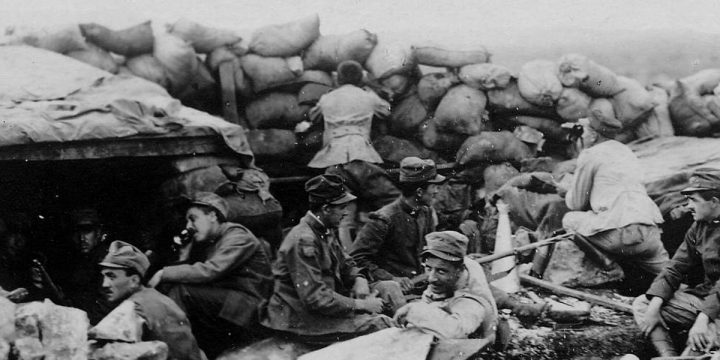
Third Battle of the Isonzo (18 October - 3 November 1915) After roughly two and a half months of reprieve to recuperate from the casualties incurred from frontal assaults from the First and Second Battle of the Isonzo, Luigi Cadorna, Italian commander-in-chief, understood that artillery played a fundamental role on the front and brought the total number to 1,200 pieces. The main objectives were to take the Austro-Hungarian bridgeheads at Bovec (Plezzo in Italian) and Tolmin, if possible the town of Gorizia. Cadorna's tactic, of deploying his forces evenly along the entire Soča (Isonzo), proved indecisive. The Austro-Hungarians took advantage of the relatively small areas of attack to concentrate their firepower on those areas. Battle Thanks to extensive artillery barrages, the Italians were able to advance to Plave (Plava in…
Read More
Fourth Battle of the Isonzo (10 November – 2 December 1915)

Fourth Battle of the Isonzo (10 November – 2 December 1915)

TheBattles
Fourth Battle of the Isonzo (10 November - 2 December 1915) In contrast to the other three Battles of the Isonzo (June, July and October), this offensive lasted a short amount of time, and is sometimes considered a continuation of the previous offensive. Most of the clash concentrated in the direction of Gorizia and on the Kras Plateau, though the push was distributed on the whole Isonzo front. The 2nd Italian Army, aiming to Gorizia, was able to capture the hilly area around Oslavia and San Floriano del Collio overlooking the Soča (Isonzo) and the town of Gorizia. The Third Army, covering the rest of the front up to the sea, launched a series of large and bloody attacks which brought no significative gain. Mount Sei Busi, already the scene…
Read More
Fifth Battle of the Isonzo (9 – 17 March 1916)

Fifth Battle of the Isonzo (9 – 17 March 1916)

TheBattles
Fifth Battle of the Isonzo (9 - 17 March 1916) After four attempts to cross the Soča (Isonzo) river and invade Austro-Hungarian territory, Luigi Cadorna, the Italian commander-in-chief, organized a strong new offensive following the winter lull in fighting which had allowed the Italian High Command to regroup and organize 8 new divisions for the front. However, it was an offensive launched not after detailed strategic planning, but rather as a distraction to shift the Central Powers away from the Eastern Front and from Verdun, where the greatest bloodshed of the war was occurring. The attack was a result of the allied Chantilly Conference of December 1915. The battle The attacks ordered by Cadorna for the 2nd and 3rd Italian armies as "demonstrations" against the enemy, proved to be less…
Read More
Sixth Battle of the Isonzo (6 – 17 August 1916)

Sixth Battle of the Isonzo (6 – 17 August 1916)

TheBattles
Sixth Battle of the Isonzo (6 - 17 August 1916) Franz Conrad von Hötzendorf had reduced the Austro-Hungarian forces along the Soča (Isonzo) front to reinforce his Trentino Offensive. Italian Chief-of-Staff Luigi Cadorna made good use of railroads to quickly shift troops from Trentino back to the Isonzo line for an offensive against the weakened Austro-Hungarian defenses. Battle On 6 August the offensive was launched against Gorizia. The offensive was concentrated in two zones: the hilly area west of the Soča (Isonzo) river near Gorizia the westernmost edge of the Karst Plateau near Doberdò del Lago. In the Battle of Doberdò, the Italians managed to conquer the main transport road leading from the coast town of Duino to Gorizia, thus securing their advance to Gorizia from the south. The Austro-Hungarian…
Read More
Seventh Battle of the Isonzo (14 – 17 September 1916)

Seventh Battle of the Isonzo (14 – 17 September 1916)

TheBattles
Seventh Battle of the Isonzo (14 - 17 September 1916) A short, sharp encounter fought from 14-17 September 1916, the Seventh Battle of the Isonzo saw Italian Chief of Staff Luigi Cadorna shift his focus from broad-based diversionary attacks to tightly focused initiatives directed at single targets. This latest Isonzo battle saw the Italian Third Army, with a large amount of artillery, attack on the Carso toward Nova Vas. Following the a successful first day, Nova Vas was assaulted on the second day with substantial artillery bombardments on German bunkers. Within minutes of the Italians ceasing fire, the Austro-Hungarian forces surrendered. Nevertheless Cadorna's continued offensives along the Soča (Isonzo) did succeed in wearing away at Austro-Hungarian resources, both in terms of manpower and in crucial artillery availability. As each battle…
Read More
Eighth Battle of the Isonzo (10 – 12 October 1916)

Eighth Battle of the Isonzo (10 – 12 October 1916)

TheBattles
Eighth Battle of the Isonzo (10 - 12 October 1916) The Eighth Battle of the Isonzo, fought briefly from 10–12 October 1916, was essentially a continuation of attempts made during the Seventh Battle of the Isonzo (14–17 September 1916) to extend the bridgehead established at Gorizia during the Sixth Battle of the Isonzo in August 1916. Italian Chief of Staff Luigi Cadorna was determined to continue Italian attacks to the left of the town, a policy that continued during the following (ninth) battle - with an equal lack of success. As with the earlier, Seventh, attack, heavy Italian casualties required that the short, sharp concentrated initiative be called off pending the army's recuperation. The seemingly interminable Isonzo onslaught was next renewed with the Ninth Battle of the Isonzo on 1…
Read More
Ninth Battle of the Isonzo (1 – 4 November 1916)

Ninth Battle of the Isonzo (1 – 4 November 1916)

TheBattles
Ninth Battle of the Isonzo (1 - 4 November 1916) The Ninth Battle of the Isonzo was an Italian offensive against Austria-Hungary in the course World War I. Including a triumvirate of battles launched after the Italians' successful seiz ure of Gorizia in August 1916 to extend their bridgehead to the left of the town, it ended in further failure for the Italian Chief of Staff Luigi Cadorna. The battle started with an attack on Vrtojba and the northern and central areas of the Karst Plateau.[1] With the ninth battle fought from 1–4 November 1916 the combined casualty total from the three linked battles proved sufficiently heavy to ensure that each attack was of short duration (each less than a week). The Italians suffered 75,000 casualties and the Austro-Hungarians 63,000.…
Read More
Tenth Battle of the Isonzo (12 May – 8 June 1917)

Tenth Battle of the Isonzo (12 May – 8 June 1917)

TheBattles
Tenth Battle of the Isonzo (12 May - 8 June 1917) With nine largely unsuccessful Isonzo battles conducted within an eighteen-month period to date, Italian Chief of Staff Luigi Cadorna - responsible for launching all nine - became increasingly uncomfortable at the prospect of German intervention to aid their weakening Austro-Hungarian ally on the Italian Front. For while it was clear that the Austro-Hungarian Army was suffering in what had become a war of attrition, the same could be said of Cadorna's army. Casualties suffered to date were tremendous and with each renewed battle tended to be higher on the Italian attackers side. The UK's new Prime Minister, David Lloyd George, had long believed that the war could not be won on the Western Front alone. Dubbed an "easterner" at…
Read More
Eleventh Battle of the Isonzo (19 August – 12 September 1917)

Eleventh Battle of the Isonzo (19 August – 12 September 1917)

TheBattles
Eleventh Battle of the Isonzo (19 August - 12 September 1917) On the Soča (Isonzo) River, Luigi Cadorna, the Italian Chief of Staff, concentrated three quarters of his troops: 600 battalions (52 divisions) with 5,200 guns. Battle The attack was carried forth from a front from Tolmin (in the upper Isonzo valley) to the Adriatic Sea. The Italians crossed the river at several points on temporary bridges, but the main effort was exerted on the Banjšice Plateau, whose capture was to further the offensive and break the Austro-Hungarian lines in two segments, isolating the strongholds of Mount Saint Gabriel and Mount Hermada. After fierce and deadly fightings, the Italian Second Army, led by General Capello, pushed back Boroević's Isonzo Armee, conquering the Bainsizza and Mount Santo. Other positions were taken…
Read More
Twelfth Battle of the Isonzo (24 October – 7 November 1917) / Battle of Caporetto

Twelfth Battle of the Isonzo (24 October – 7 November 1917) / Battle of Caporetto

TheBattles
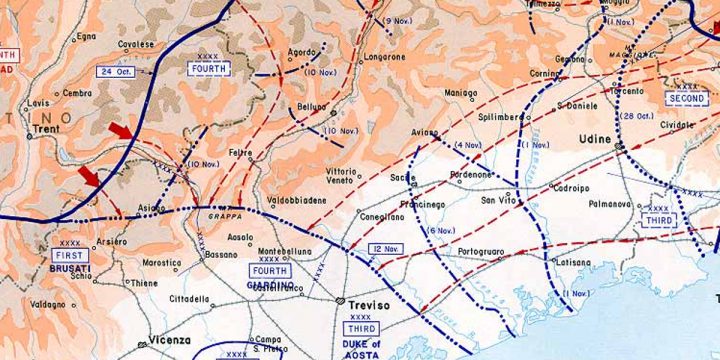
Twelfth Battle of the Isonzo (24 October - 7 November 1917) / Battle of Caporetto The Battle of Caporetto in 1917 (also known as the Twelfth Battle of the Isonzo, the Battle of Kobarid or the Battle of Karfreit as it was known by the Central Powers), took place from 24 October to 19 November 1917, near the town of Kobarid (now in north-western Slovenia, then part of the Austrian Littoral), on the Austro-Italian front of World War I. The battle was named after the Italian name of the town (also known as Karfreit in German). Austro-Hungarian forces, reinforced by German units, were able to break into the Italian front line and rout the Italian forces opposing them. The battle was a demonstration of the effectiveness of the use of stormtroopers…
Read More